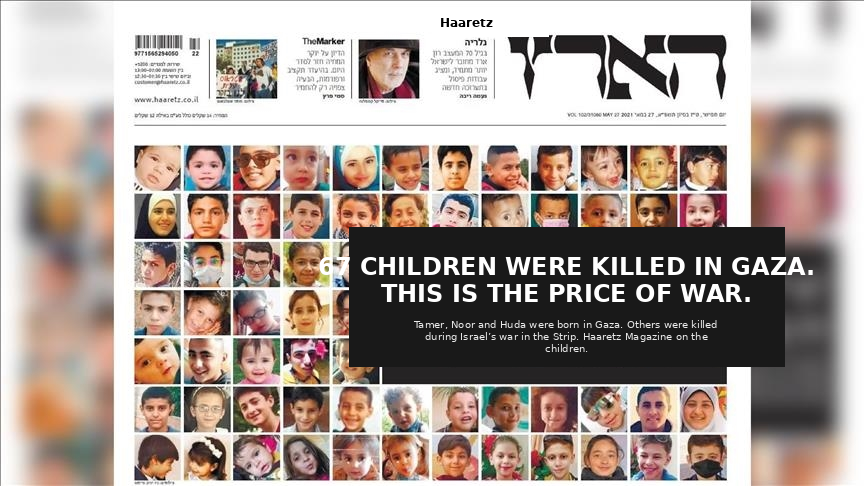
The irony of the title is intentional. No official legal document, statute, or military standard classifies a newborn as a terrorist. That is precisely the point. A baby cannot be a terrorist, cannot be a combatant, cannot be a security suspect, and cannot be converted into an early-warning system for a future crime. Yet a political and military vocabulary that repeatedly frames Palestinian childhood through terrorism, recruitment, indoctrination, and future threat has helped create a legal and moral environment in which Palestinian children are too easily killed, detained, categorized, explained away, or treated as collateral to a security narrative.
The legal question is: Can a few exceptional cases of violence by minors justify a state policy that treats Palestinian childhood itself as a security threat? Does it justify the death of infants, the mass injury of children, the detention of minors without charge or trial, Or does it justify a system that classifies Palestinian children through the language of terrorism, as though childhood itself were evidence of future guilt? The answer, legally and morally, is no.
The official Israeli record is not hidden. The Ministry of Foreign Affairs has published documents with titles such as “The Exploitation of Children for Terrorist Purpose,” “Participation of Children and Teenagers in Terrorist Activity,” and “Abuse and Exploitation of Minors to Carry out Terrorist Attacks.”[i] The IDF’s own public-facing page on “The Status of Children in Gaza” describes Hamas activity targeting children as para-military training and an “early recruitment pool,” and refers to two 14-year-olds as “terrorists.”[ii] The Knesset has also dealt legislatively with terrorism in relation to very young minors, including a 2015 bill concerning prison sentences for minors under 14.[iii] These sources prove that the category of “terrorism” has become the dominant official lens through which all Palestinian minors are discussed.
That distinction matters. A state may accuse a particular minor of a particular offense and still owe that child every protection due under juvenile justice and international law. What it may not do is transform a child’s nationality, neighborhood, family, school, or political environment into evidence — let alone a presumption — of terrorism. Any suspicion of terrorism must be individualized, grounded in evidence, subject to review, and strictly constrained by law. Otherwise, it is merely collective suspicion under another name.
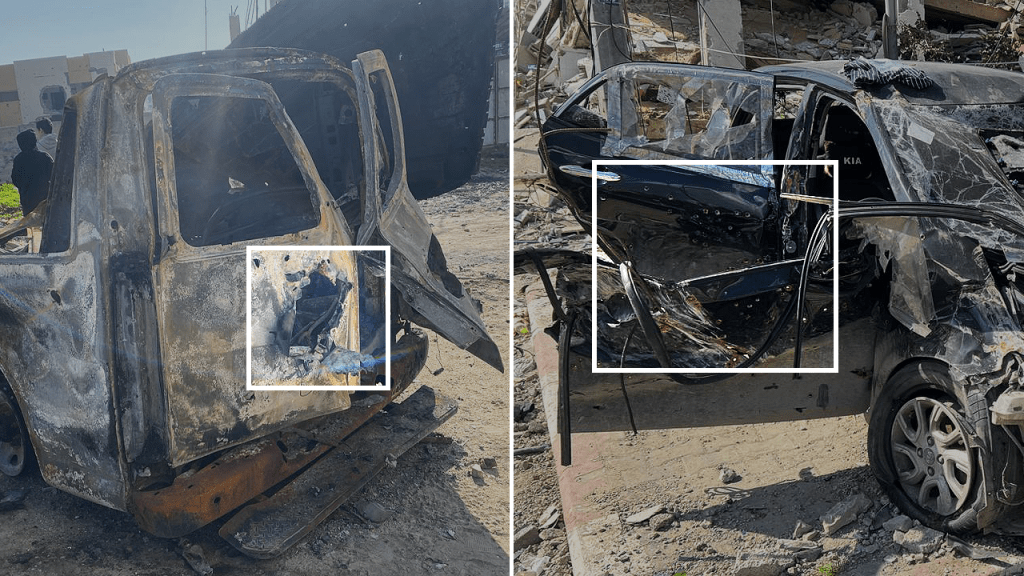
The numbers expose the moral collapse of the category. According to the Palestine Datasets project by Tech for Palestine, which republishes and structures lists sourced from Gaza officials the list of identified persons killed in Gaza up to July 31, 2025 contained 60,199 names, including 18,457 children. Within that list were 518 baby boys and 450 baby girls under one year old: 968 identified babies under the age of one.[iv] These are not “potential terrorists.” They are not future combatants. They are dead infants. For newborns in the stricter sense, the public data is more fragmented: Time reported in August 2024 that about 115 newborns had been killed, while The Guardian reported in September 2024 that Gaza’s named list included 169 babies born after October 7, 2023.[v] These figures are conservative because they exclude many unidentified, unrecovered, unregistered, or indirectly caused deaths.
UNICEF’s public statements confirm the scale of the child catastrophe. In May 2025, UNICEF reported that more than 50,000 children had reportedly been killed or injured in Gaza.[vi] The legal conclusion does not depend on whether every figure is perfect. It depends on whether a state can continue invoking security while children are being killed and injured at a scale that makes the ordinary meaning of child protection almost meaningless. If the answer is yes, then law has become a press release.
The same security logic appears in detention. UNICEF’s 2013 review of Palestinian children in the Israeli military detention system examined the process from apprehension through trial and sentencing. It recalled that torture and cruel, inhuman, or degrading treatment are absolutely prohibited and that there are no exceptions for security considerations or war.[vii] Save the Children’s summary of the UNICEF review is even more direct: it states that the ill-treatment of children in contact with the Israeli military detention system is widespread, systematic, and institutionalized, from arrest to sentencing.[viii] One may dispute individual cases; one cannot pretend the system has no pattern.
Defense for Children International – Palestine reported that, as of December 31, 2025, 351 Palestinian children were detained in Israeli prisons, without any judgment, according to the latest data available from the Israel Prison Service. Of these, 180 children—51 percent—were held in administrative detention without charge, the highest number and proportion DCIP had recorded since it began monitoring these figures in 2008.[ix] Administrative detention is already a grave legal exception when used against adults. Used against children, it becomes a confession of institutional moral failure: paradoxically, the state claims it has enough suspicion to imprison a child, but not enough evidence to charge that child in a normal legal process.
Israeli human rights organizations have documented the mechanics of this system. B’Tselem and HaMoked reported that 1,737 Palestinian boys from East Jerusalem, aged 12 to 17, were arrested between January 2014 and August 2016, and that many were held for long periods before any charge or trial.[x] Their affidavits described night arrests, handcuffing, blindfolding, lack of access to counsel, absence of parents during interrogation, and the treatment of Palestinian teenagers as a hostile population rather than as children entitled to special protection.[xi] HaMoked’s prison data also shows how the category of “security” inmate changes the rights environment: security prisoners are treated differently from ordinary prisoners, and the overwhelming majority are Palestinians from the occupied territories.[xii] The vocabulary of security is therefore not rhetorical decoration. It has consequences.
The central legal principle is simple. A child does not lose childhood because the state dislikes the child’s community. A minor accused of an offense remains a minor. A child allegedly exposed to incitement remains a child. A teenager suspected of throwing stones remains entitled to due process. No baby killed in an airstrike can be retroactively transformed into a terrorist threat or justified as a military necessity. International law does not contain a Palestinian exception to childhood.
This is where the irony becomes unavoidable. The infant in Gaza, the toddler under rubble, the twelve-year-old arrested at night, the fourteen-year-old interrogated without effective legal protection, and the seventeen-year-old held as a security detainee are all placed, in different ways, under the same shadow. Israel need not literally call a baby a terrorist. Once Palestinian childhood is filtered through the categories of future danger, collective suspicion, demographic threat, and hostile population, the legal and security structure can produce much the same result without ever saying the words. It is enough to build a system where Palestinian life is first translated into risk.
That is the state crime behind the language. The scandal is not only the killing or illegal detention of children, grave as both are. It is the prior act of classification itself: the conversion of a protected child into a security problem, and of childhood into a category of terrorist suspicion. Once that conversion is accepted, anything can be explained. The dead child becomes an unfortunate consequence. The detained child becomes a preventive necessity. The terrified family becomes an operational detail. The demolished childhood becomes an intelligence file.
No democracy worth the name should accept this. A state that imprisons children without charge, kills babies under a doctrine of overwhelming force, and explains Palestinian childhood primarily through terrorism has crossed a line that law was built precisely to prevent. The point is not that Israel alone faces no security threat. The point is that security cannot be allowed to swallow the child. When it does, it ceases to be defense. It is no longer merely security policy; it is systematic state violence with legal stationery.
The measure of a legal order is not how it speaks about its enemies. It is how it treats those least capable of being enemies. Palestinian babies are not terrorists. Palestinian children are not born suspects. Palestinian minors are not a disposable class beneath due process. A state that can defend “its right to exist” only by classifying children as future threats is not defending civilization. It is dismantling it, one child at a time.
[i] Israel Ministry of Foreign Affairs, “The Exploitation of Children for Terrorist Purpose,” January 15, 2003, https://www.gov.il/en/pages/the-exploitation-of-children-for-terrorist-purpose; Israel Ministry of Foreign Affairs, “Participation of Children and Teenagers in Terrorist Activity during the ‘Al-Aqsa’ Intifada,” January 30, 2003, https://www.gov.il/en/pages/participation-of-children-and-teenagers-in-terrori; Israel Ministry of Foreign Affairs, “Abuse and Exploitation of Minors to Carry out Terrorist Attacks,” April 22, 2002, https://www.gov.il/en/pages/abuse-and-exploitation-of-minors-to-carry-out-terrorist-attacks-22-apr-2002.
[ii] Israel Defense Forces, “The Status of Children in Gaza,” accessed May 21, 2026, https://www.idf.il/en/mini-sites/hamas/the-status-of-children-in-gaza/. The IDF page states that Hamas activities targeting children constitute para-military training and an “early recruitment pool,” and refers to two 14-year-olds as “terrorists.”
[iii] Knesset, “Prison sentences for minors under 14 who were convicted of terrorism approved in preliminary reading,” November 25, 2015, https://m.knesset.gov.il/en/news/pressreleases/pages/pr11782_pg.aspx; Knesset, “PACE resolution says Israel violating rights of Palestinian minors,” October 10, 2018, https://main.knesset.gov.il/EN/News/PressReleases/Pages/press1010r.aspx.
[iv] Palestine Datasets / Tech for Palestine, “Killed in Gaza July 31st Update,” August 17, 2025, https://data.techforpalestine.org/updates/tags/killed-in-gaza/. The update states that Gaza officials released a list of those killed up to July 31, 2025; it reports 60,199 total persons and 18,457 children, including 518 baby boys and 450 baby girls under one year old.
[v] Juwayriah Wright, “The Infants Among the War Dead,” Time, August 17, 2024, https://time.com/7011918/gaza-infants-death-toll-twins-killed-israel-hamas-war/; Emma Graham-Harrison, “Gaza publishes identities of 34,344 Palestinians killed in war with Israel,” The Guardian, September 17, 2024, https://www.theguardian.com/world/2024/sep/17/gaza-publishes-identities-of-34344-palestinians-killed-in-war-with-israel.
[vi] UNICEF, “‘Unimaginable horrors’: more than 50,000 children reportedly killed or injured in the Gaza Strip,” May 27, 2025, https://www.unicef.org/press-releases/unimaginable-horrors-more-50000-children-reportedly-killed-or-injured-gaza-strip.
[vii] UNICEF, Children in Israeli Military Detention: Observations and Recommendations (Jerusalem: UNICEF, 2013), 5–6, https://www.unicef.org/sop/media/1746/file/CAAC%20Bulletin%202013%2C.pdf. UNICEF recalls that torture and cruel, inhuman, or degrading treatment are absolutely prohibited, including in situations involving security considerations or war.
[viii] Save the Children Resource Centre, “Children in Israeli Military Detention: Observations and Recommendations,” accessed May 21, 2026, https://resourcecentre.savethechildren.net/document/children-israeli-military-detention-observations-and-recommendations. The abstract states that ill-treatment of children in the Israeli military detention system is “widespread, systematic and institutionalized.”
[ix] Defense for Children International – Palestine, “More than half of Palestinian child detainees have no charges,” March 18, 2026, https://www.dci-palestine.org/more_than_half_of_palestinian_child_detainees_have_no_charges.
[x] B’Tselem and HaMoked, Unprotected: Detention of Palestinian Minors in East Jerusalem (October 2017), 7–8, https://www.btselem.org/sites/default/files/publications/201710_unprotected_eng.pdf.
[xi] B’Tselem and HaMoked, Unprotected, 5, 9–10, 24–30. The report states that Palestinian teenagers from East Jerusalem are treated as members of a hostile population and documents arrest and interrogation practices based on affidavits from 60 boys.
[xii] HaMoked: Center for the Defence of the Individual, “9,243 ‘Security’ Inmates Are Held in Prisons Inside Israel,” prisoners charts, accessed May 21, 2026, https://hamoked.org/prisoners-charts.php. HaMoked notes that “security” inmates are treated differently from regular inmates and that the overwhelming majority are Palestinians from the occupied territories
 N. A. Jabre
Leave a comment